
The Making of the Indian Constitution is one of the most important topics in Indian Polity for SSC exams such as SSC CGL, CHSL, MTS, GD, and CPO. Questions are frequently asked from the Constituent Assembly, Drafting Committee, Cabinet Mission Plan, and important constitutional events. These quick revision notes cover all important facts and one-liner points required for last-minute preparation.
🏛️ Meaning and Origin of the Constitution
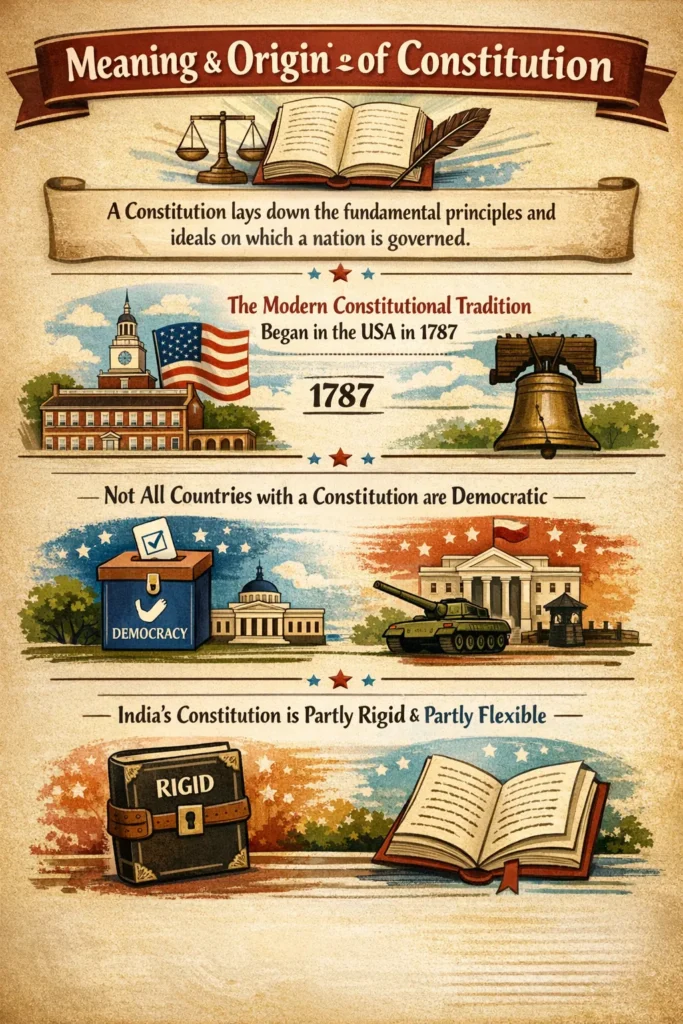
Other Forms of Government
- Communist: Means of production controlled by the government.
- Monarchy: Rule by a single king or monarch.
- Totalitarian: Complete control over citizens’ lives.
- Oligarchy: Rule by a few people.
British Proposals Before Constitution
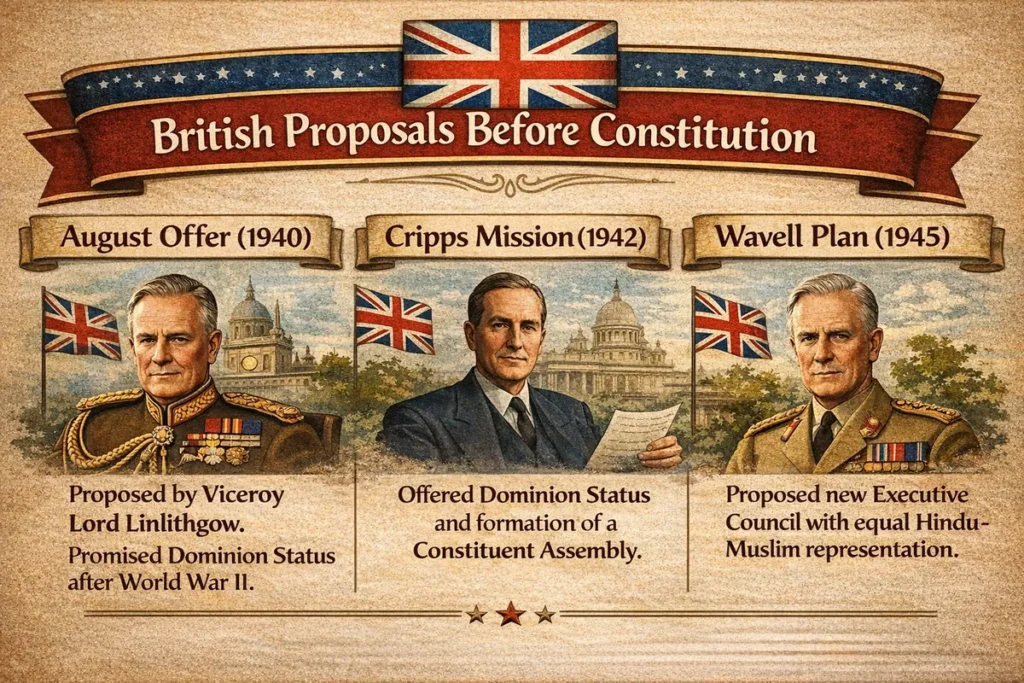
August Offer (1940)
- Proposed by Viceroy Lord Linlithgow.
- Promised Dominion Status after World War II.
Cripps Mission (1942)
- Offered Dominion Status and formation of a Constituent Assembly.
Wavell Plan (1945)
- Proposed new Executive Council with equal Hindu-Muslim representation.
🏛️ Cabinet Mission Plan (1946)
- Accepted by both Congress and the Muslim League.
- Led to the formation of the Constituent Assembly.
- Members: Pethick Lawrence, Stafford Cripps, A.V. Alexander.
- Total Members: 389
- British Indian Provinces: 296
- Princely States: 93
- Elected members from provinces: 292
- Chief Commissioner Provinces: 4
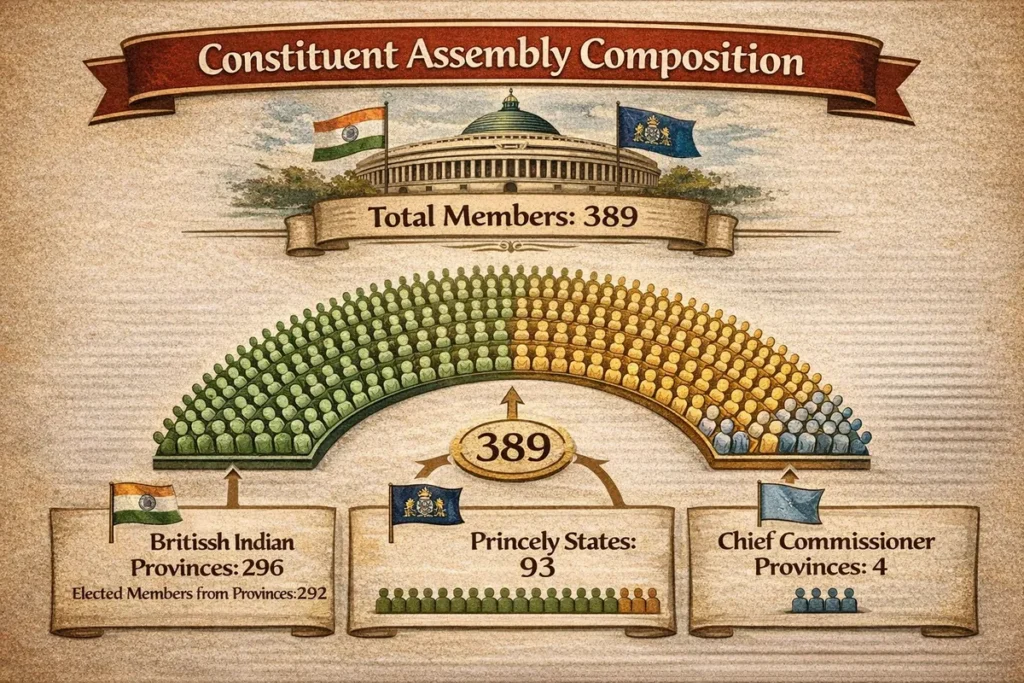
🧾 Constituent Assembly Composition
- Total Members: 389
- British Indian Provinces: 296
- Princely States: 93
- Elected members from provinces: 292
- Chief Commissioner Provinces: 4
🗳️ Elections and Interim Government
- Elections held in July–August 1946.
- Interim Government was formed on 2 September 1946.
- President of the Executive Council: Jawaharlal Nehru.
- Governors-General: Lord Wavell → Lord Mountbatten.
📜 Objective Resolution
- Presented by Jawaharlal Nehru on 13 December 1946.
- Adopted on 22 January 1947.
- Became the philosophical foundation of the Constitution.
🏛️ Committees of Constituent Assembly
Major Committees
- Drafting Committee — B.R. Ambedkar
- Union Constitution Committee — Jawaharlal Nehru
- Provincial Constitution Committee — Sardar Patel
- Advisory Committee on Fundamental Rights — Sardar Patel
Minor Committees
- Rules Committee — Rajendra Prasad
- Finance & Staff Committee
- Linguistic Provinces Commission
- Press Gallery Committee, etc.
✍️ Drafting Committee (1947)
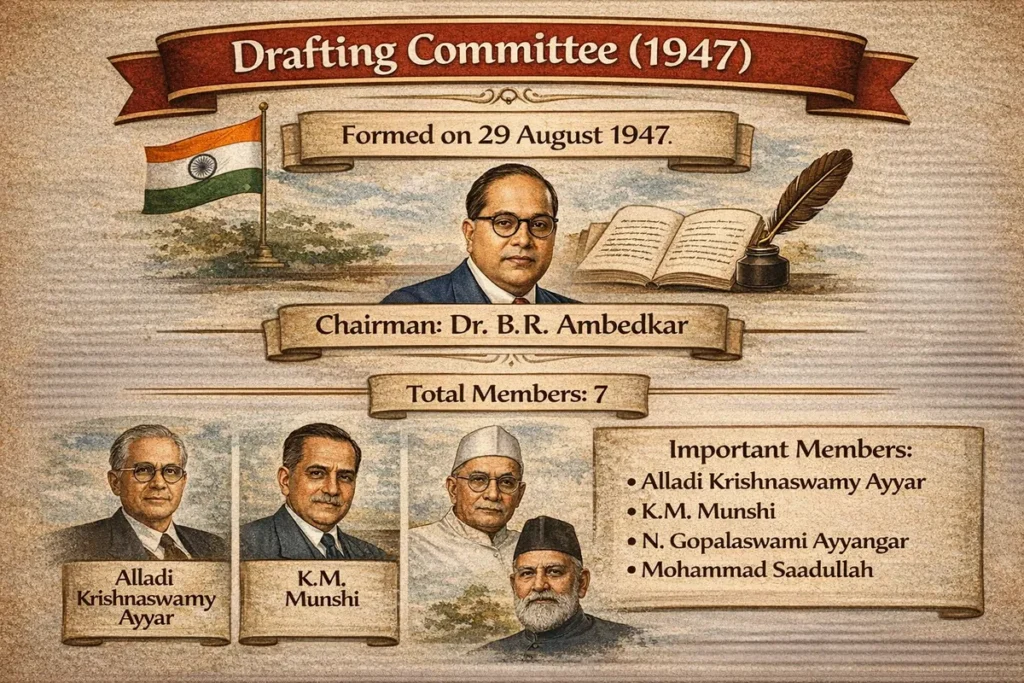
- Formed on 29 August 1947.
- Chairman: Dr. B.R. Ambedkar
- Total Members: 7
Important Members:
- Alladi Krishnaswamy Ayyar
- K.M. Munshi
- N. Gopalaswami Ayyangar
- Mohammad Saadullah
📘 Drafting Process of the Constitution
- First Draft published: 21 February 1948
- Final Draft introduced: 4 November 1948
- 3 Readings conducted in the Assembly.
- Constitution was adopted on 26 November 1949.
📅 Important Sessions & Adoption
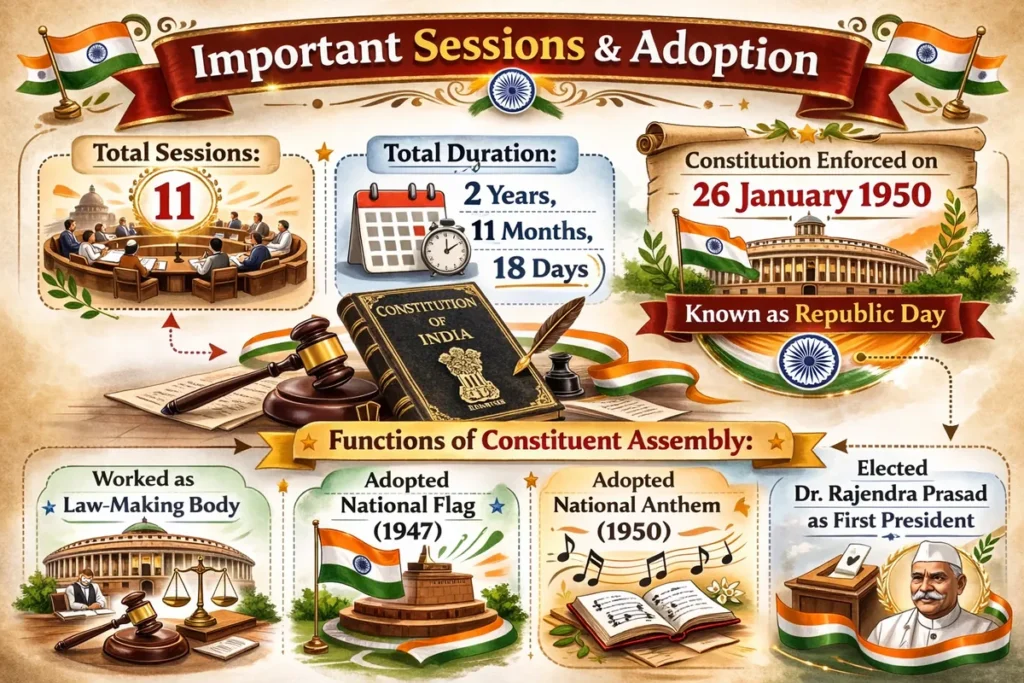
- Total Sessions: 11
- Total Duration: 2 years, 11 months, 18 days
- Constitution was enforced on 26 January 1950
- Known as Republic Day.
Functions of Constituent Assembly:
- Worked as law-making body.
- Adopted National Flag (1947).
- Adopted National Anthem (1950).
- Elected Dr. Rajendra Prasad as first President.
⭐ Important Additional Facts
- Constitutional Advisor: B.N. Rau
- Chief Draftsman: S.N. Mukherjee
- Members who signed Constitution: 284
- Constitution Calligraphers:
- English: Prem Behari Narain Raizada
- Hindi: Vasant Krishna Vaidya
Important Female Members
- Rajkumari Amrit Kaur
- Sucheta Kriplani
- Sarojini Naidu
✅ Quick Revision Summary
- Constituent Assembly formed: 1946
- Drafting Committee formed: 29 Aug 1947
- Constitution adopted: 26 Nov 1949
- Constitution enforced: 26 Jan 1950
- Chairman Drafting Committee: Dr. B.R. Ambedkar
Read Full Notes: Click Here
Practice Chapterwise MCQs: Click Here